
Materials research
Cathodes and
magnetic tracers.
Explore our cathode materials for lithium-ion and sodium-ion cells, and our work on magnetic tracers for tracking underground fluids and authenticating goods.
Explore cathode materials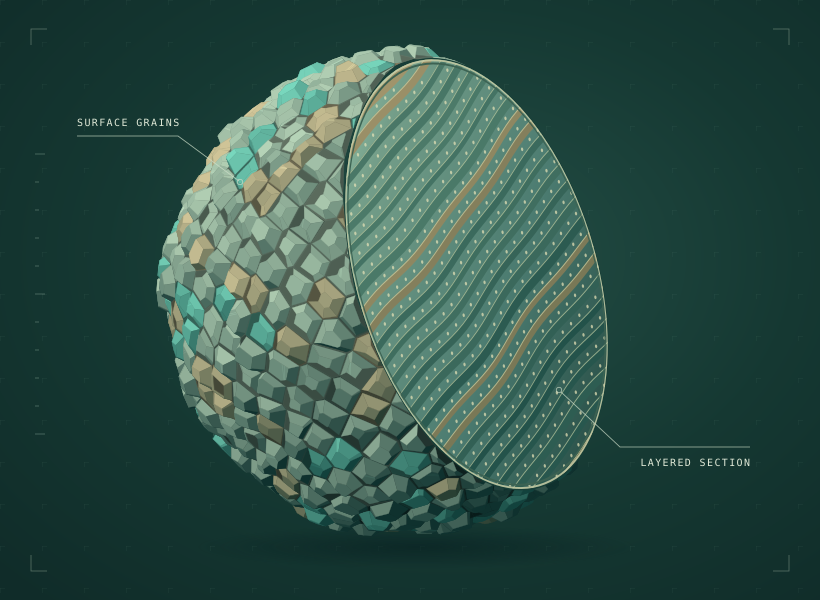
01 Cambridge BioMagnetics / Battery materials
Cathode
chemistries.
Our cathode portfolio covers three nickel-based chemistries for lithium-ion cells and a separate family for sodium-ion cells. Explore the four options below, or contact us to discuss the requirements of your cell.
Discuss your cell requirements01NMC 622Lithium-ion
Nickel, manganese and cobalt form the transition-metal component of this lithium-ion cathode. The 622 designation refers to their nominal 6:2:2 ratio.
Ni 6 / Mn 2 / Co 2
02NMC 811Lithium-ion
NMC 811 uses the same three transition metals as NMC 622, with a higher share of nickel. Its nominal nickel:manganese:cobalt ratio is 8:1:1.
Ni 8 / Mn 1 / Co 1
03NCALithium-ion
NCA combines nickel, cobalt and aluminium in a lithium-ion cathode. Aluminium distinguishes this chemistry from the manganese-containing NMC family.
Nickel / Cobalt / Aluminium
04Sodium-ion cathodeSodium-ion
In a sodium-ion cell, sodium ions carry charge between the electrodes. This family of cathode materials is designed for that cell chemistry.
Charge carrier / Na+
02 Cambridge BioMagnetics / Subsurface sensing
Following fluids
below the surface.
A spin-off from the Cavendish Laboratory at the University of Cambridge, Cambridge BioMagnetics is developing magnetic nanoagents that give injected fluids a detectable signature. The aim is to study where those fluids travel without drilling additional monitoring wells.
How the signal travels
- Tag the fluid
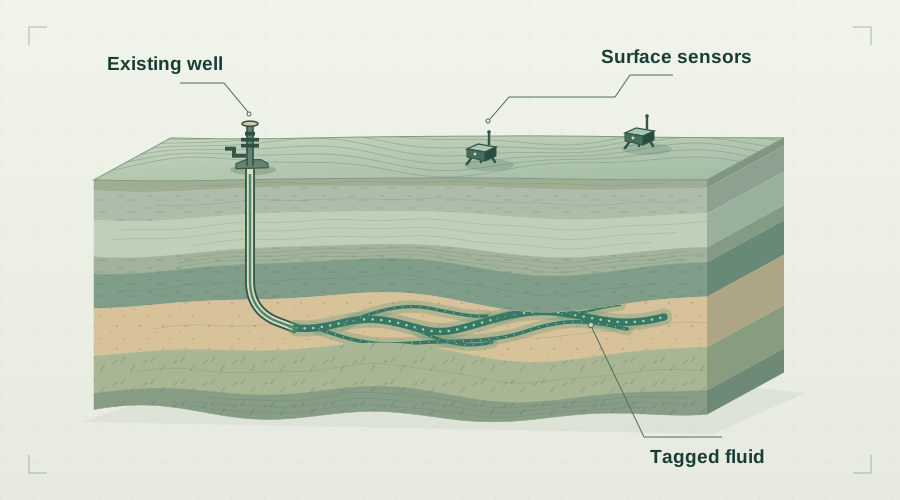
Magnetic nanoagents travel with fluid introduced through an injection well.
- Sense its signature
The concept uses Earth’s magnetic field and sensors at the surface or on the seabed to detect the tagged fluid remotely.
- Trace the pathways
Researchers use geophysical models to interpret the signal and study changes in underground flow.
Carbon storage
Tracking injected CO₂ could help operators monitor containment and investigate possible migration towards sensitive areas.
Mining & energy
In mining, hydraulic fracturing and enhanced oil recovery, fluid traces could help identify flow paths and unintended escape.
Research background
Cambridge BioMagnetics reports an R&D contract from PETRONAS, an EU Seal of Excellence and research support from Innovate UK and the Royal Society. Its work includes geophysical modelling, measuring magnetic signals during flow and testing how nanoagents withstand reservoir conditions.
Contact